
Find out what your system should be making
Solar Performance Inspection in Scottsdale, AZ
A full check of panels, wiring, inverter and monitoring, with production compared against what the array should produce.
- Free written estimate after the system is tested, not guessed from the driveway
- Itemized pricing: parts, labor, roof work and any utility or city paperwork on separate lines
- City permit and utility requirements checked before any work is scheduled
Is Your System Making What It Should?
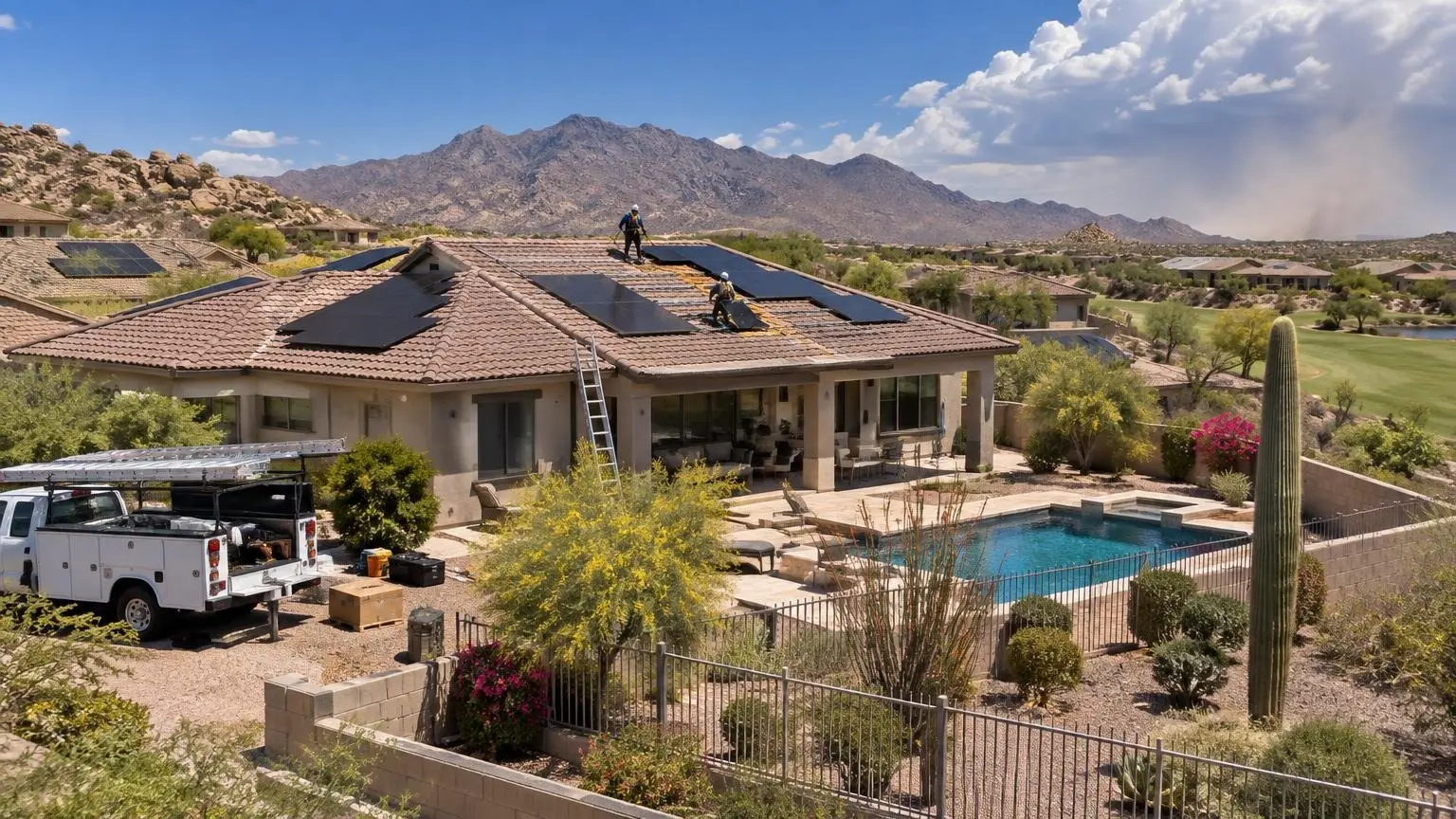
A Solar Performance Inspection answers a simple question that is hard to answer from the ground: is this system producing what it should for its size, its roof and the Scottsdale sun? Many systems lose output slowly, a little each year from dust, a failing microinverter or a loose connection, and the owner never sees a single alarm. An inspection compares what the system makes with what it ought to make and then finds the gap.
Who books an inspection
- Homeowners who bought a house with solar and want to know what they own, especially if the original installer is gone
- Owners whose bills crept up while usage stayed about the same
- Anyone with a monitoring app that went dark and no idea how the system has done since
- Sellers who want a clean report to show buyers
- Owners of older systems deciding whether to repair, upgrade the inverter, add storage or leave it alone
Starting with the numbers
Before the roof, we look at production history: monitoring data if you have it, or the generation and export figures on a year of utility bills from APS or SRP. We estimate expected output for your array's size, tilt and direction and compare month by month. Normal summer heat loss shows up the same way every year; a fault shows up as a sudden step down or as one part of the array lagging behind the rest.
What we test on site
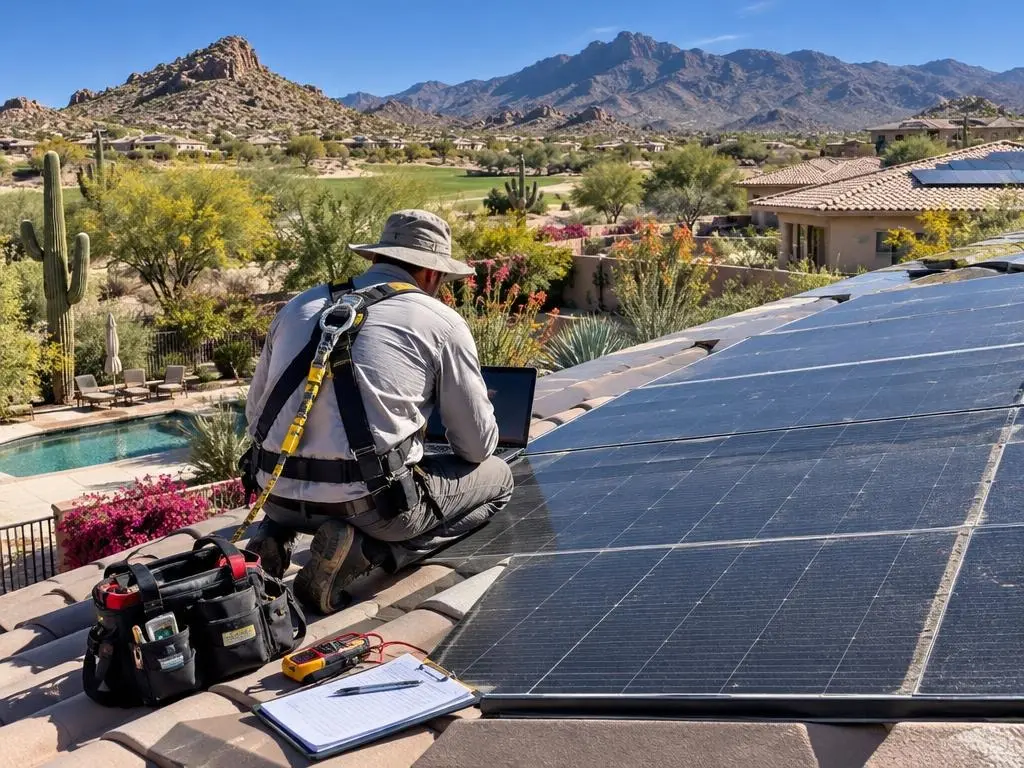
- Inverter: fault history, operating temperature, firmware status and AC output
- Strings: open-circuit voltage and operating current on each, compared with each other and with the panel ratings
- Panels: cracked glass, browning, delamination and hot spots, along with soiling and shading from trees or new construction
- Wiring and connectors: heat damage, loose or mismatched connectors, cables resting on hot tile, and conduit condition
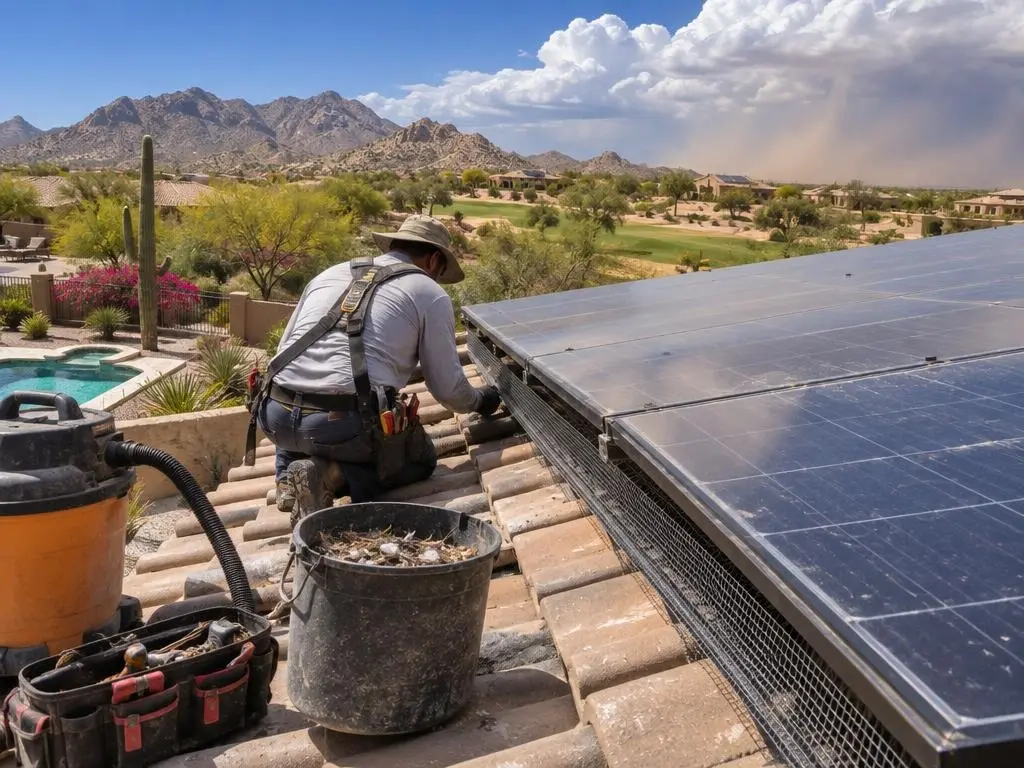
- Mounts and roof: loose hooks, cracked tiles around penetrations, and debris or nesting under the array
- Disconnects and breakers: labeling, condition and correct sizing
- Monitoring: whether data is reaching the app and whether it matches the meter
Heat, dust and age
In Scottsdale, three ordinary things hide real problems. Summer heat lowers output on every system, so a weak string is easy to blame on the weather. Dust builds between storms and can account for part of a drop, which washing fixes. And panels lose a small amount of output each year by design, which the manufacturer's degradation figures describe. Separating those normal losses from faults is the main point of the inspection.
What you get
A written summary of what we found, photos from the roof, production compared with expected output, and a list of recommended repairs in order of value, each with a price. Some findings will be urgent, like a heat-damaged connector. Others can wait. You decide what to do.
What the Inspection Covers
Every part of the system that can cost you production.
Production review
Monitoring or utility bill data compared with expected output for your array.
Inverter and electronics check
Fault logs, temperatures, AC output and microinverter or optimizer reporting.
String testing
Voltage and current measurements to find underperforming panels or wiring faults.
Roof-level visual inspection
Panels, connectors, mounts, flashing, tiles and nesting checked from the roof.
Written report
Findings, photos and itemized repair options ranked by what they return.
Typical Solar Inspection Costs
| Job | Typical range |
|---|---|
| Solar panel inspection (when not covered by an installer service contract) | $150 to $350 |
National range from HomeGuide. Ranges vary with system size, roof access and how much testing the problem needs. Your written estimate is the price.
How an Inspection Works
1. Send the data
Share your monitoring login or a year of utility bills, plus any paperwork from the original installation.
2. Desk review
We compare actual and expected production to see where to look.
3. On-site testing
Inverter, strings, wiring, panels, mounts and monitoring are checked.
4. Written findings
You get photos, numbers and priced repair options, most important first.
Solar Performance Inspection Questions
How much should my system produce?
It depends on the system's size in kilowatts, the roof's direction and tilt, shading and age. Output in Scottsdale peaks in spring and dips in midsummer heat. The inspection gives you a monthly expected range so you can check it yourself afterward.
I just bought a house with solar. What should I ask for?
Ask the seller for the installation paperwork, the inverter and panel models, the monitoring login, and any lease or loan documents. Find out whether the system is owned or leased, because leased systems are usually serviced by the leasing company.
Do panels wear out?
Panels lose a little output each year, and the manufacturer's datasheet lists the expected rate. Cracked glass, browning or hot spots cause faster loss and show up during an inspection.
How often should a system be inspected?
There is no fixed rule. Watching monthly production and acting on a drop is a sensible approach, along with a full check if you buy a home with solar or plan roof work.
Solar Performance Inspection Service Areas
- Solar Panel Repair in Scottsdale, AZ
- Solar Panel Repair in Old Town Scottsdale, AZ
- Solar Panel Repair in McCormick Ranch, AZ
- Solar Panel Repair in Gainey Ranch, AZ
- Solar Panel Repair in DC Ranch, AZ
- Solar Panel Repair in Grayhawk, AZ
- Solar Panel Repair in Troon, AZ
- Solar Panel Repair in Silverleaf, AZ
- Solar Panel Repair in Pinnacle Peak, AZ
- Solar Panel Repair in Desert Mountain, AZ
- Solar Panel Repair in McDowell Mountain Ranch, AZ
- Solar Panel Repair in Fountain Hills, AZ
- Solar Panel Repair in Cave Creek, AZ
- Solar Panel Repair in Carefree, AZ
- Solar Panel Repair in Rio Verde, AZ
- Solar Panel Repair in Paradise Valley, AZ
- Solar Panel Repair in Kierland, AZ
Get a Solar Performance Inspection Estimate
Not sure what your system is making? Start with an inspection.